You may also like
Sunglasses Hackney
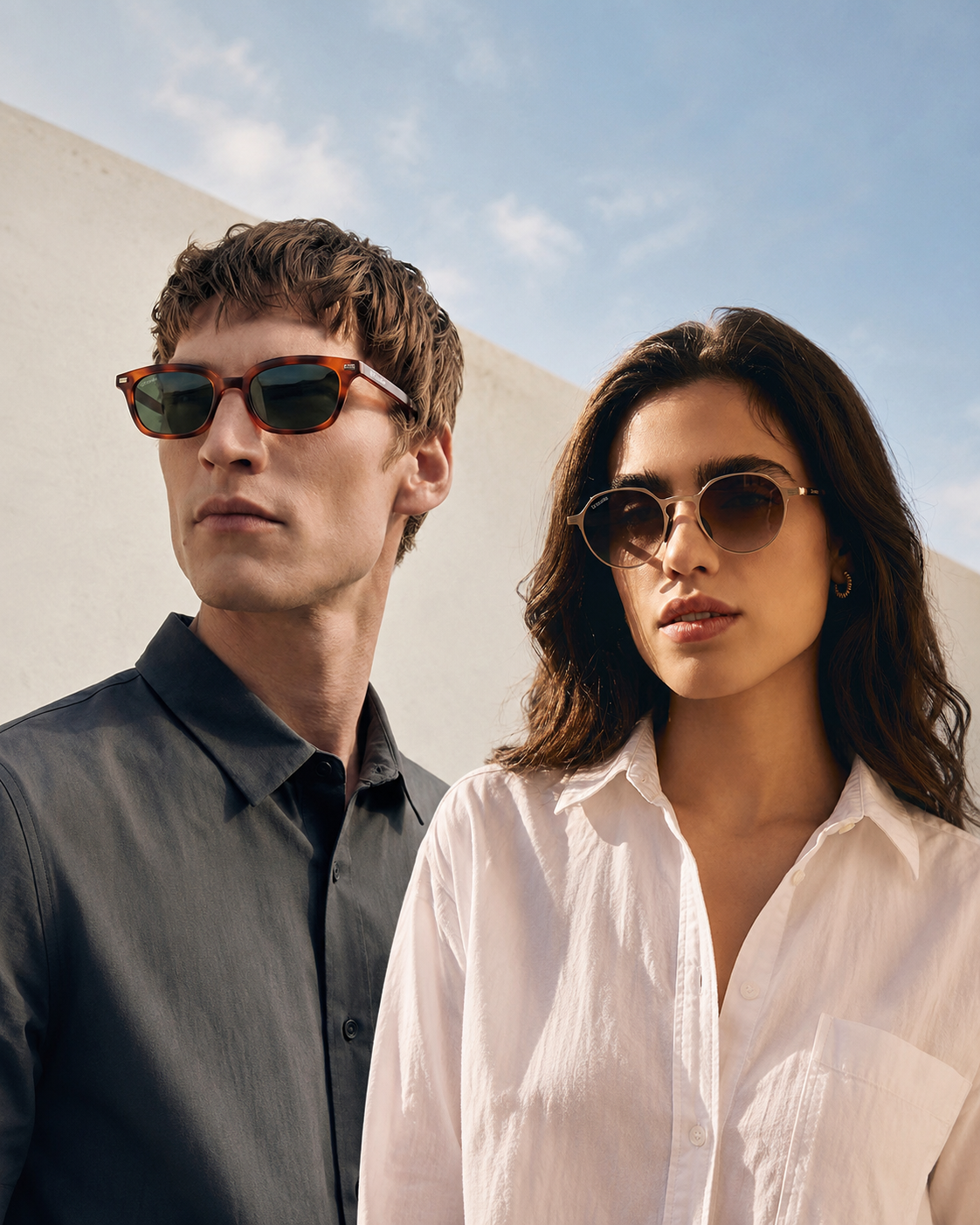
Rectangular fronts emphasise width in relation to lens height. Compare narrow, restrained proportions with bolder rims; a low lens does not necessarily mean the whole frame is small or suitable for a narrow face.
Read moreRead less
Frame proportions and measurements
Start with front width, bridge and temple length, using comfortable glasses as a reference. In women's square sunglasses, compare those measurements with lens height too: similar widths can produce different coverage and visual proportions.
Colours and lens features
A dark frame emphasises the outline, while transparent finishes can soften its visual presence. Explore men's square sunglasses for further proportions and finishes. Check polarisation and other lens features separately; a colour or shape does not confirm them.
Use and care
To compare a softer outline, explore round sunglasses. Keep either shape in a case and follow its care instructions. Remove particles before cleaning with a suitable microfibre cloth, and avoid leaving glasses on hot surfaces or resting on their lenses.
Explore related collections
Frequently asked questions
What should I compare when choosing from Sunglasses Hackney?
Compare the available options in these categories: aviator frames, rectangular frames, cat-eye frames. Compare width, bridge and how far the frame extends at the temples before choosing a colour. Lens tint, polarisation and UV protection are separate specifications; check each for the exact version you select.
Do they all suit narrow faces?
Not necessarily. Compare front width, bridge and temples because a small lens can be part of a wider frame.
How do I choose a frame shape?
Compare the effect of rounded and angular lines, but check measurements too. A shape you like still needs a bridge and temples that provide a comfortable fit.
Are all sunglasses in this collection polarised?
No. The collection includes different lens types. Confirm polarisation in the chosen option's specifications rather than inferring it from colour or a mirrored finish.
How do polarisation and UV protection differ?
Polarisation reduces certain reflections, while UV protection describes ultraviolet filtering. They are different features that should be checked separately when choosing sunglasses.
How can I tell if sunglasses are too large?
Watch for slipping when you tilt your head or a bridge that barely makes contact. Compare dimensions with stable glasses; holding them tighter with accessories does not correct an unsuitable size.
How do I compare glasses with the same shape in different sizes?
Check overall width, lens height, bridge and temple length, then compare frame thickness. Fronts with similar widths can look very different. Use glasses that already fit well as a reference and check their support when smiling or tilting your head.